
This post contains affiliate links. Please see my disclosure about affiliate links here.
As part of my research for my How Travel Builds Resilience post, I came across the Finnish concept of resilience thanks to Katja Panztar’s book Finding Sisu. Pantzar’s description of life quality in Finland fascinated me. When I got the chance to visit the country through an EU-funded programme, I jumped at the opportunity.
The most obvious start point for a trip to Finland is capital city, Helsinki. I visited Helsinki in summer, which is a great time to see the city. The weather is warm and the days are very long (i.e. early sunrise; late sunset). I also visited Turku which is equally a great city.
Helsinki is the northernmost capital city in the EU, located less than 500 miles from the Arctic Circle. This northern latitude is the reason for its long summer days. It’s also the reason for its cold winters.
First up, a look at what to see and do in Helsinki in summer.
WHAT TO SEE & DO IN HELSINKI
Helsinki Lutheran Cathedral and Senate Square
The white cathedral (Tuomiokirkko) building overlooking Senate Square (Senaatintori) is one of the most iconic buildings in Helsinki. Its green-domed roof towers over neighbouring buildings. The interior is minimalist. The steps leading down to Senate Square were a hive of activity when I visited.

Harbour Area and the Old Market Hall
Continue downhill from Senate Square to the harbour area (Kauppatori), where national and international ferries arrive and depart. The architecture in this area reminded me a lot of St. Petersburg – Finland was part of Imperial Russia until 1917 when it became an independent country. In the summer, the harbour area is packed with street performers and food stalls.
Built in 1889, the Old Market Hall (Vanha Kauppahalli) has a selection of shops and dining areas. Here you can sample Finnish delicacies such as salmon soup, reindeer meat, and fresh berries. You can also browse through handicrafts and enjoy the vibrant atmosphere.
Suomenlinna
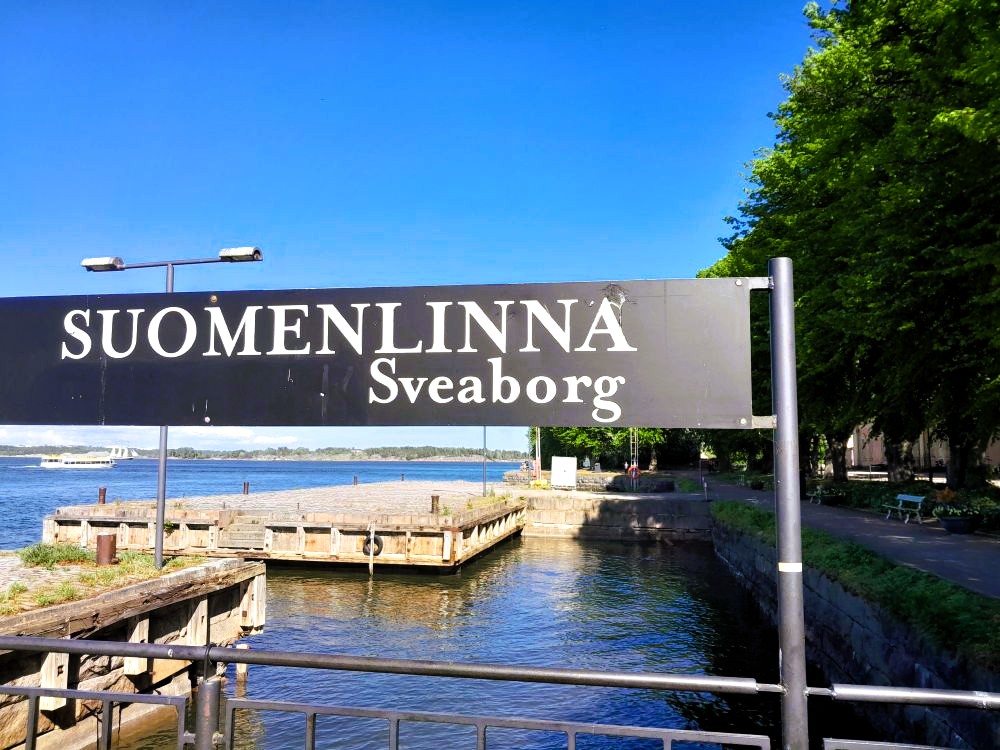
Stay in the harbour area to catch a quick ferry to Suomenlinna, an 18th-century fortress of six connected islands. Originally built under Swedish rule (Sveaborg in Swedish), this UNESCO World Heritage site showcases military history and offers a number of pleasant walking trails. If you buy a public transport day ticket, the price of the Suomenlinna ferry is included.
Esplanade Park
West of the harbour area, Esplanade Park (Esplanadin Puisto) is perfect for a leisurely stroll. During the summer months, soak up the colours of the flowers and the live music performances. The adjacent streets are lined with cafes and boutiques.
Outdoor Swimming Pools
Helsinki hosted the summer Olympics in 1952 and the swimming stadium, located beside the main Olympic stadium, is still in use. For a couple of euros, you can swim in the pool of champions. I visited on a glorious sunny evening but a word of warning: the pool water was not warm.
More outdoor swimming can be found at Allas Sea Pool complex in the harbour area. Allas is a private enterprise so tickets are more expensive than at the city-run Olympic pool. Allas has two regular heated pools, a sea pool, and a whole host of other facilities such as saunas and dining areas. If any area epitomised the Helsinki summertime vibe, this was it.
See Helsinki by bike
Helsinki is one of the best cities that caters for cyclists, with both functional cycle lanes and leisure cycle routes. It’s a city with a huge amount of greenery that’s in full bloom during the summer months.
The city’s Archipelago route encompasses every outdoor feature that Helsinki offers such as forested areas, sea views, beaches, urban parks, and public art works. Starting in the West Harbour area, the route travels to the islands of Lauttasaari, Lehtisaari and Kuusisaari, before re-joining the mainland at Munkkiniemi. Further details can be found on the My Helsinki website.
Café culture
Finland consumes the most amount of coffee per capita in the world. Whether it’s a café in an architecturally traditional building or a hipster joint, you will not be short of a place to get your caffeine fix. In summer, it moves outdoors, so benefit from the warm weather and long days.
Statues
Whether it’s the Three Smiths at the intersection of Aleksanterinkatu and Mannerheimintie, Alexander II at Senate Square, Flying Finn Paavo Nurmi near the Olympic Stadium, or the giants outside the Amox Rex museum, Helsinki draws on its history, achievements and quirky humour for its public art.

Oodi
Oodi is Helsinki’s Central Library and it is glorious both outside and inside. The architecture, atmosphere and services make it one of the world’s greatest public libraries. The building’s undulating façade is made of glass, steel and spruce wood.

The interior has three floors, with three different functions, that also combine these materials. If you encounter inclement weather during your visit to Helsinki, use the time to visit the interior of Oodi. To be honest, I was so impressed with Oodi it was my favourite site in Helsinki.
Day trip to Porvoo
If you have a day to spare, a trip to Porvoo comes recommended. Located approximately one hour by bus east of the capital city, the city dates back to the 12th century. The Old Town consists of pastel-coloured wooden shops and restaurants on cobblestone streets. Porvoo Cathedral (Tuomiokirkko) overlooks the Old Town. Head down to the riverside to watch small boats meander along the still river.

HELSINKI TRAVEL ESSENTIALS
Where to stay in Helsinki
For most of the above listed sites, the best areas to stay in are Centre, Kamppi, Kluuvi, Kaartinkaupunki, and Kruununhaka. However, Helsinki has an outstanding public transport system of trams, railway lines, and the metro, so pick a place near a tram/rail stop if you are staying outside of these areas.
Click here for a great selection of hotels, apartments and hostels.
Getting around Helsinki
I stayed in Kamppi where Helsinki’s exceptionally confusing underground bus station is located. Thankfully, I was only 10 minutes’ walk from exceptionally straightforward Central Station. From there, I could take commuter trains or trams. To travel within the city centre, I used the tram system. Here is the tram system map.
Helsinki’s metro is the northernmost metro system in the world. The metro lines run from east to west.
A public transport day ticket will allow for unlimited travel on all public transport systems with the AB zone. All of the areas listed in the Where to Stay section above are within these zones.
The airport (Lentoasema) is served by commuter trains I and P. Line P gets to the city centre much quicker than line I, line I gets to the airport much quicker than line P – it’s a circular route. The airport is located in zone C so a separate ticket is required for that trip.
Just to note, place names are written in Swedish as well as Finnish. For example, Helsinki is written as Helsingfors in Swedish, while the airport (Lentoasema) is written as flygplatsen.
HELSINKI IN SUMMER: FINAL THOUGHTS
Helsinki is a clean, safe city with exceptionally friendly and helpful locals. It was a pleasure to visit and I would equally recommend it to anyone who wants to live there. Their built environment works around the needs of the people, accommodates the weather conditions (cold and warm), and balances with nature.
This perfection doesn’t come cheap – Finland is one of the most expensive countries in Europe. But it’s certainly a place to learn how to do the whole work-life balance and great outdoors well.

 Arrivals Hall