
This post contains affiliate links. Please see my disclosure about affiliate links here.
The Italian city of Ravenna is very popular with group tours. Why? Because it is one of the most historically important cities in the country and its mosaics are UNESCO World Heritage monuments. In fact, the city has eight UNESCO World Heritage monuments!
The mosaics in Ravenna and the city’s historical importance were my two reasons for visiting Ravenna, but I also discovered that it’s a very nice city to meander around.
WHERE IS RAVENNA?
Ravenna is approximately 80km east of Bologna. A direct train from Bologna Centrale to Ravenna Centrale takes a minimum 1 hour 10 minutes. Ravenna is also reached from the Adriatic coast by bus and train.
For the rest of the country, check out my Italy Country Guide.
WHY IS RAVENNA IMPORTANT?
In 324, Emperor Constantine divided the Roman Empire into East and West. The Eastern Roman Empire had its headquarters in Byzantium (modern-day Istanbul) and was also known as the Byzantine Empire. That empire lasted until 1453 when it was conquered by the Ottoman Empire. Byzantium was renamed Constantinople by Constantine.
Rome remained the capital of the Western Roman Empire. Rome came under increasing attack and, in 402, Ravenna was made capital of the Western Roman Empire, a position it held until the Western Roman Empire fell in 476.
Ravenna became capital of the Ostrogothic Kingdom in 493. In 540, Ravenna was conquered by the Byzantine Empire and became its capital in Italy. From 712 onwards, Ravenna changed hands several times.
Architecture and mosaics from the 5th and 6th centuries still stand in Ravenna. This is why the town is famous, and hence draws the tour groups.
MOSAICS IN RAVENNA
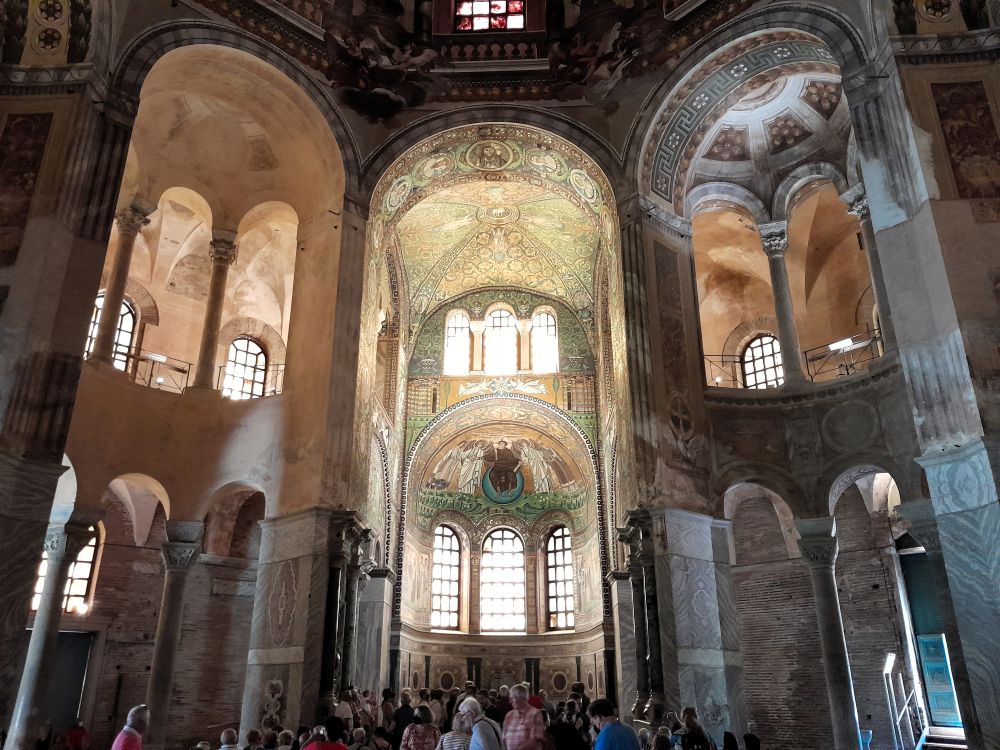
The mosaics in Ravenna city centre are located in six sites:
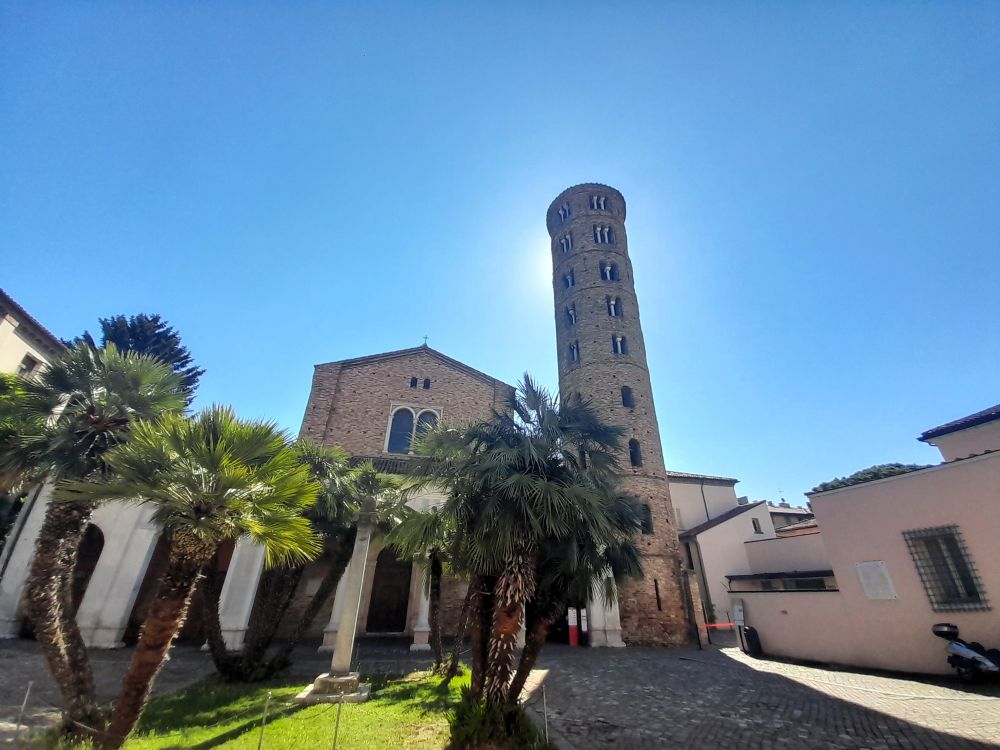
- Basilica di Sant’Apollinare Nuovo
- Battistero Neoniano (Neonian Baptistery)
- Basilica di San Vitale
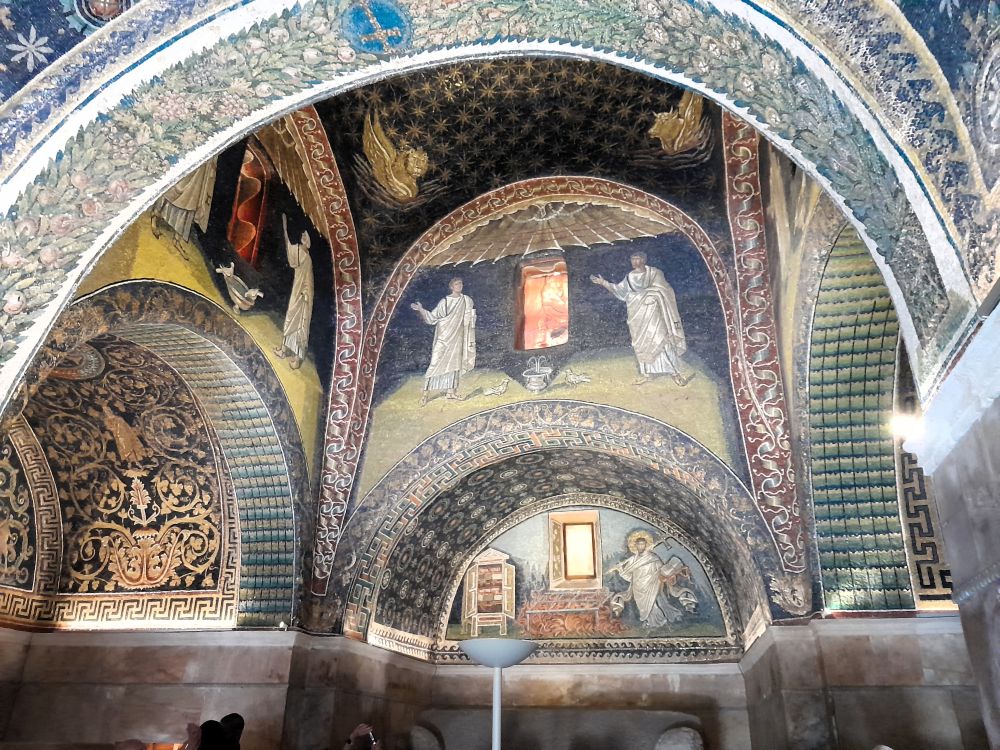
- Mausoleum of Galla Placidia
- Archiepiscopal Chapel in the Arcivescovile Museum
- Battistero degli Ariani (Arian Baptistery)
Further mosaics are located in Basilica di Sant’Apollinare in Classe which is located outside of the city centre. This is also a UNESCO World Heritage monument.
The remaining UNESCO World Heritage monument site in Ravenna is the Mausoleum of Theodoric which is also located outside of the city centre.

TIPS FOR VISITING RAVENNA’S SITES
If you are travelling to Ravenna by train, Basilica di Sant’Apollinare Nuovo is the nearest site to the train station and was the least busy of the sites I visited. Here you can purchase the ticket for the five sites in the city centre that require an admission ticket.
Tickets can also be purchased online in advance or at the Arcivescovile Museum. The Arian Baptistery is free of charge and doesn’t require a ticket.
The busiest sites were Basilica di San Vitale and Galla Placidia Mausoleum. If you want to visit these sites, the ticket will cost a few euros extra but is worth it.
IS RAVENNA WORTH VISITING?
If you are interested in art and/or history then Ravenna should be close to the top of your list of places to visit in Italy. For both history and art, Ravenna is only matched by Rome, Florence and Venice.
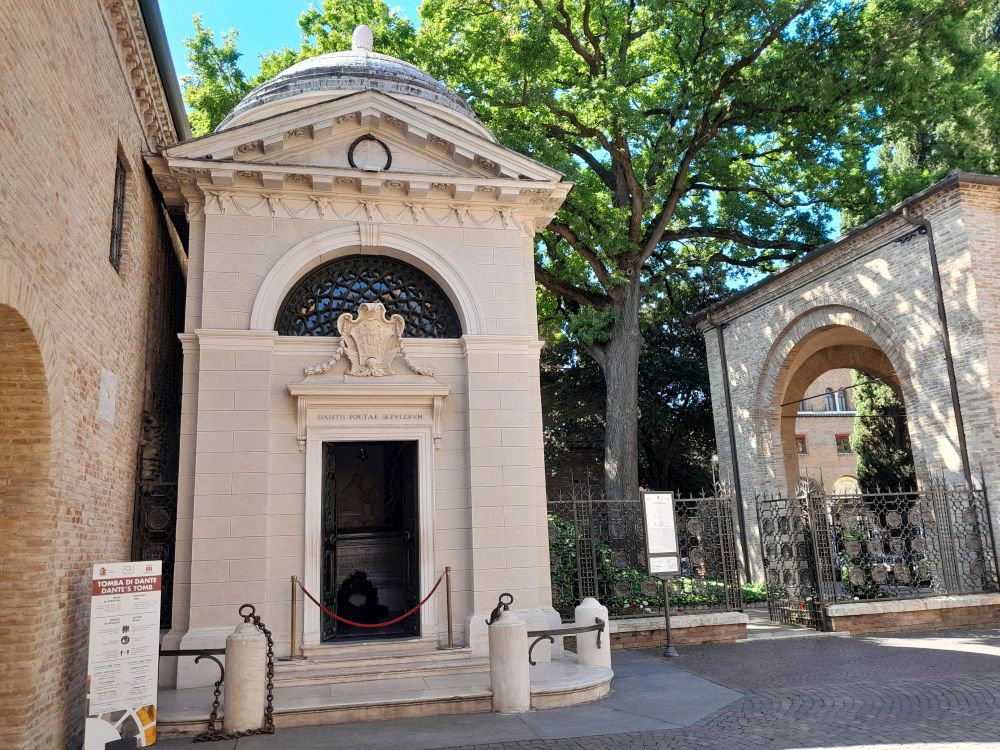
However, there are other attractions in Ravenna. Fans of Italian literature will be interested in visiting Dante’s tomb.
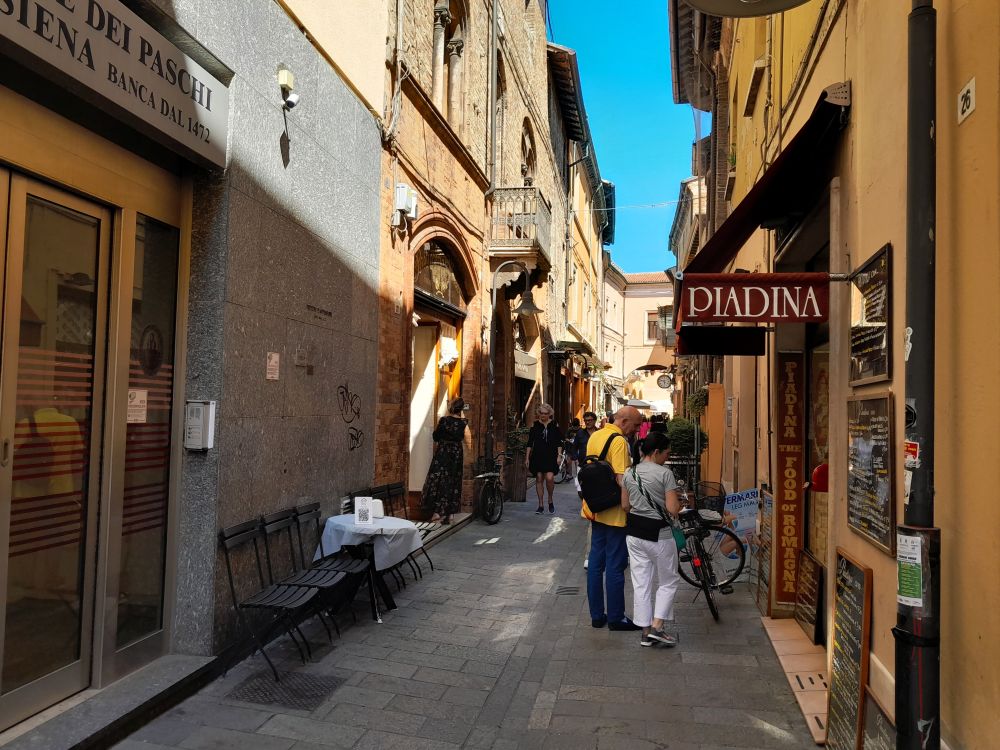
Like pretty much everywhere in Italy, Ravenna is wonderful for meandering around and drinking coffee. The covered market (Mercato Coperto) on Piazza Andrea Costa is a particularly nice place to do this.

If you want to want to stay overnight in Ravenna or use it as a base for visiting the region, have a look at these deals on accommodation.
 Arrivals Hall