This post contains affiliate links. Please see my disclosure about affiliate links here.
When it comes to history, Athens is a heavy-hitter. It’s the oldest capital city in Europe, and the birthplace of democracy, western philosophy, theatre and the Olympic Games.
This means there are a lot of sights to see in the city. If you only have 2 days in Athens, it’s important to curate your itinerary to maximise your time. This post helps you with that, and also offers options should you stay for 3-4 days.
BEST PLACE TO STAY IN ATHENS
Traffic is hectic in Athens so if you can’t stay within walking distance of the central areas of Plaka and Syntagma, then stay near a metro station. While the Athens metro only has three lines, there are metro stations near the main sites. Also, the metro’s excellent and reasonably priced service means you’ll traverse the city and to the airport quite quickly and cheaply.
I stayed in the gorgeous and friendly Stanley Hotel near Metaxourghio metro station – The rooftop pool and view of the Acropolis were also big draws. While the area was a little rundown (but safe), the hop-on, hop-off buses stopped beside the entrance to the metro station on Karaiskaki Square. The 5-Star Wyndham Grand Athens was also in this area.
DAY 1 ITINERARY
Acropolis:
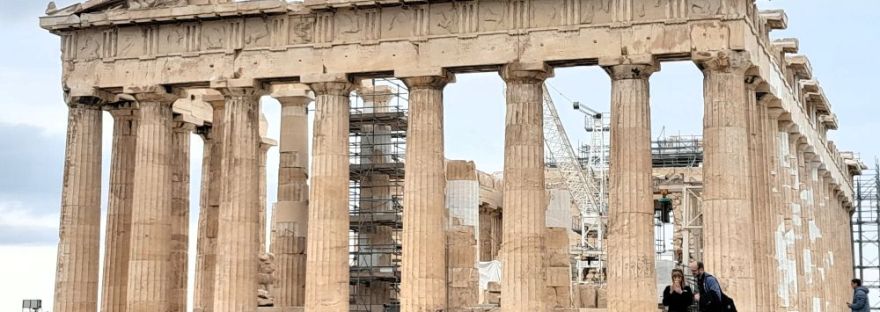
The Acropolis, a UNESCO World Heritage site, is one of the most iconic sites in world and should be number one on your list of things to see in Athens. The Acropolis is a rock hill that is home to a number of buildings, the columned Parthenon being the most recognisable and the most imposing.
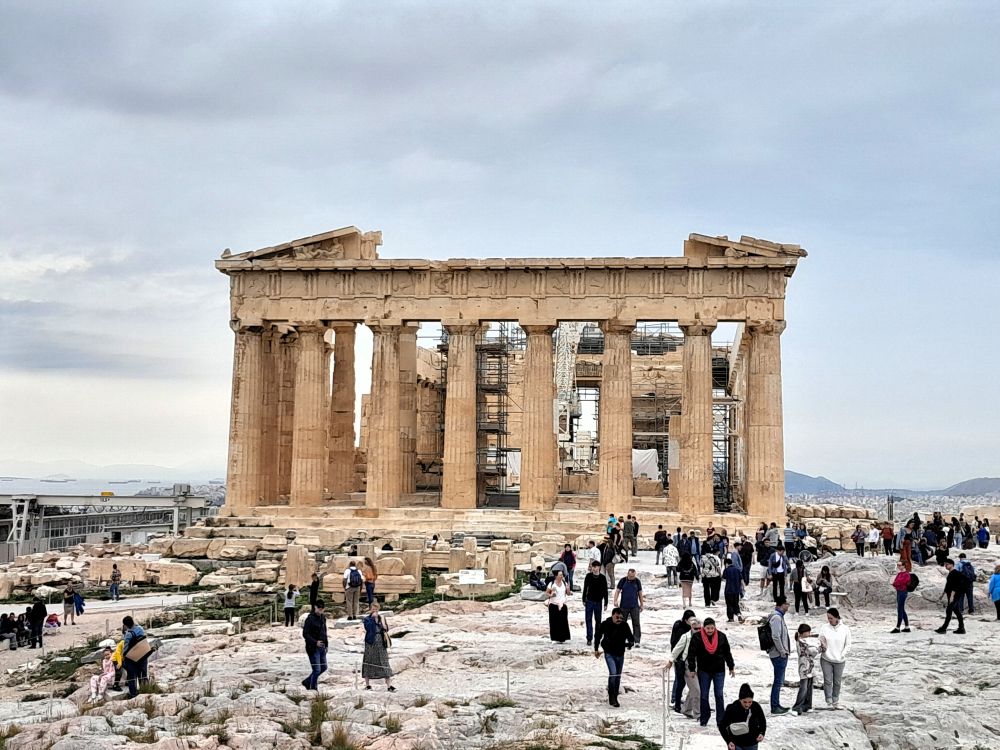
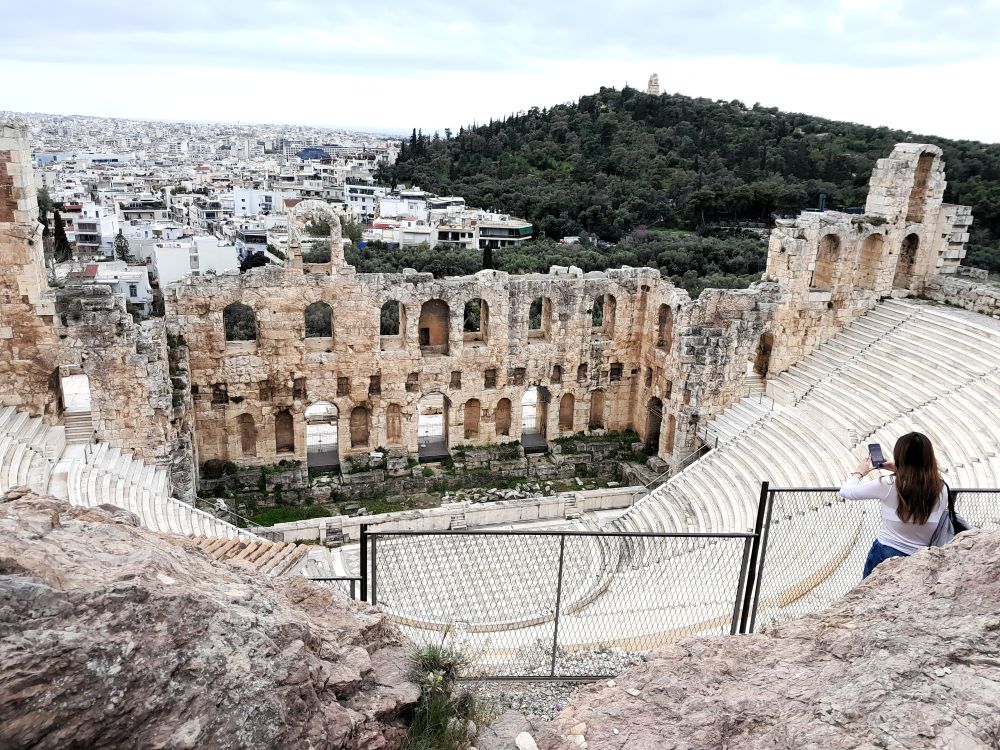
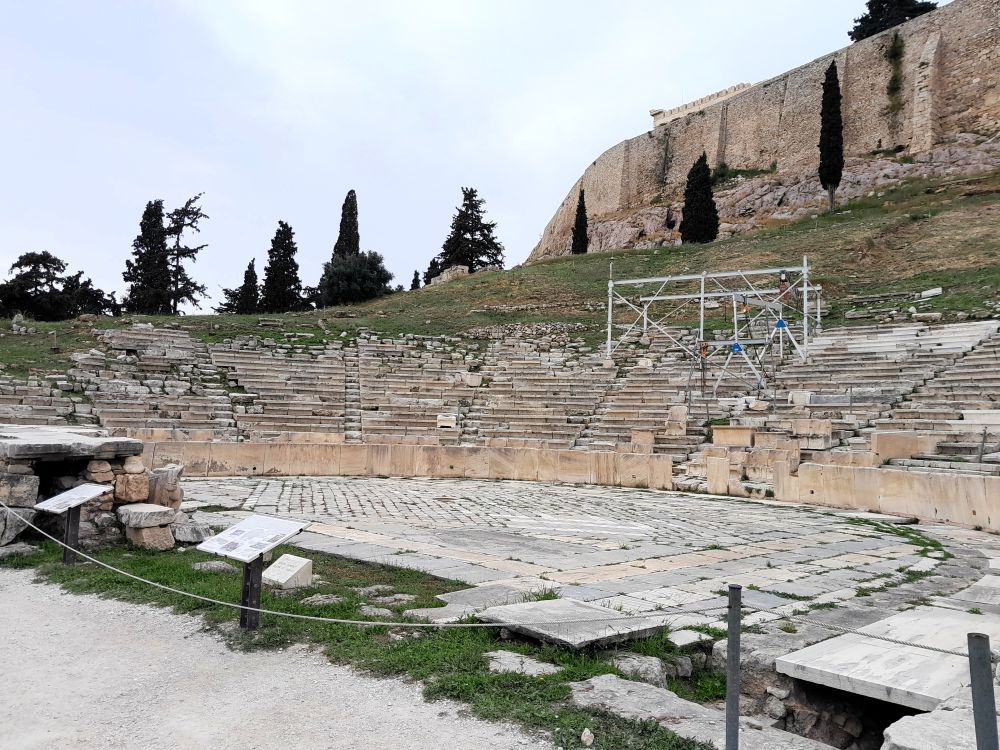
Visitors enter the top part of the Acropolis via the Propylaia, while the wheelchair access point enters near the Erechtheion. Other buildings in the Acropolis area that are worth looking at are the Odeon of Herodes Atticus, a Roman Empire construct still used for events, and the Theatre of Dionysos, site of the world’s first theatre in the 6th Century BC. The current theatre dates back to 300-400 BC.
The Acropolis in its entirety is an impressive work of engineering and well worth seeing. Many of the site’s original works are now housed in the Acropolis museum, located at the south side of the Acropolis.
To avoid the crowds, visit the Acropolis first thing in the morning or 2-3 hours before closing. Booking tickets in advance is advisable – you can do so here. The nearest metro station is Akropoli.
Other Historical Sites:
East of Akropoli metro station lies the Temple of Olympian Zeus, King of the Greek Gods. Construction began in the 6th Century BC but stalled until Roman Emperor Hadrian oversaw its completion in 131 AD. As a token of gratitude, the locals built Hadrian’s Arch in the emperor’s honour.
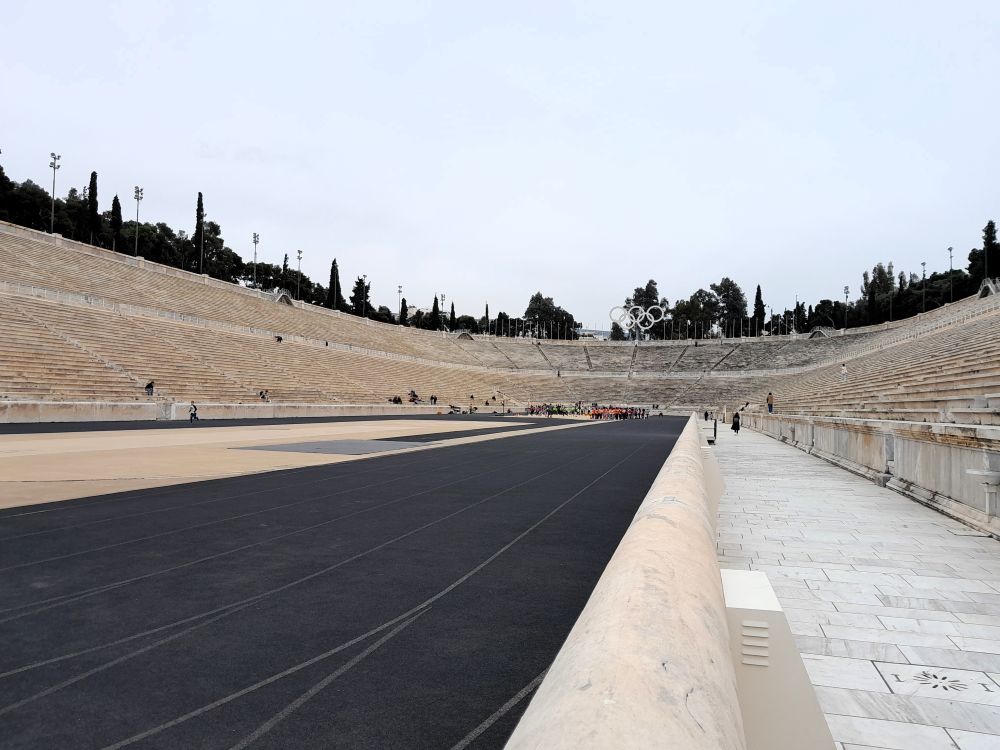
A couple of hundred metres east of the Temple of Olympian Zeus is the Panathenaic Stadium, site of the first modern Olympic Games in 1896. Its marble structure is simply dazzling. It was also the site of the Panathenaic Games, so dates back to the 6th Century BC.
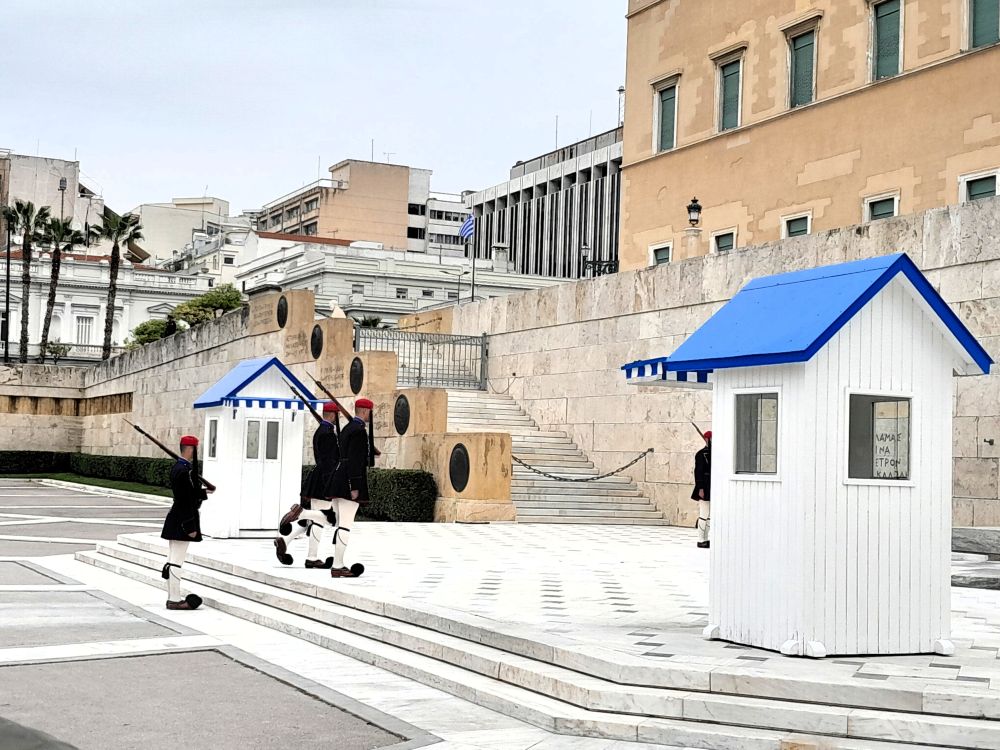
From the Panathenaic Stadium, walk through the National Gardens to Syntagma Square, the heart of Athens. The Tomb of the Unknown Soldier lies outside the Parliament building and is guarded 24 hours a day by soldiers called Evzones. The Changing the Guard ceremony takes place every hour. The Evzones have a unique uniform, the most striking feature being the tassels on the shoes.
DAY 2 ITINERARY
There are two options for your second day in Athens: Museums or the Great Outdoors. Both can start in Syntagma Square.
Museums:
Adjacent to the Parliament Building on Vasilissis Sofias Avenue are four museums: Benaki Museum, Museum of Cycladic Art, the Byzantine Museum, War Museum.
Exit Syntagma Square via Panepistimiou to locate the Numismatic Museum and the National Library. At the end of Panepistimiou, turn right onto Aiolou Patision to discover the National Archaeological Museum. Beside this is the National Technical University of Athens, scene of the Athens Polytechnic uprising in November 1973.
Return to Syntagma Square via Stadiou to discover the Museum of the City of Athens and the National Historical Museum.
Great Outdoors:
A couple of kilometres south of Athens city centre lie some great beaches. While Glyfada is the beach most guides recommend, the following looked very nice: Edem, Kalamaki, Akti Iliou, Alimou, Agios Kosmas, Asteria, Asteras, Voula, Kavouri, and Vouliagmeni.
All beaches can be reached via bus 122. All apart from Kavouri and Vouliagmeni can be reached via the tram line, arguably the best way to travel via rush hour.
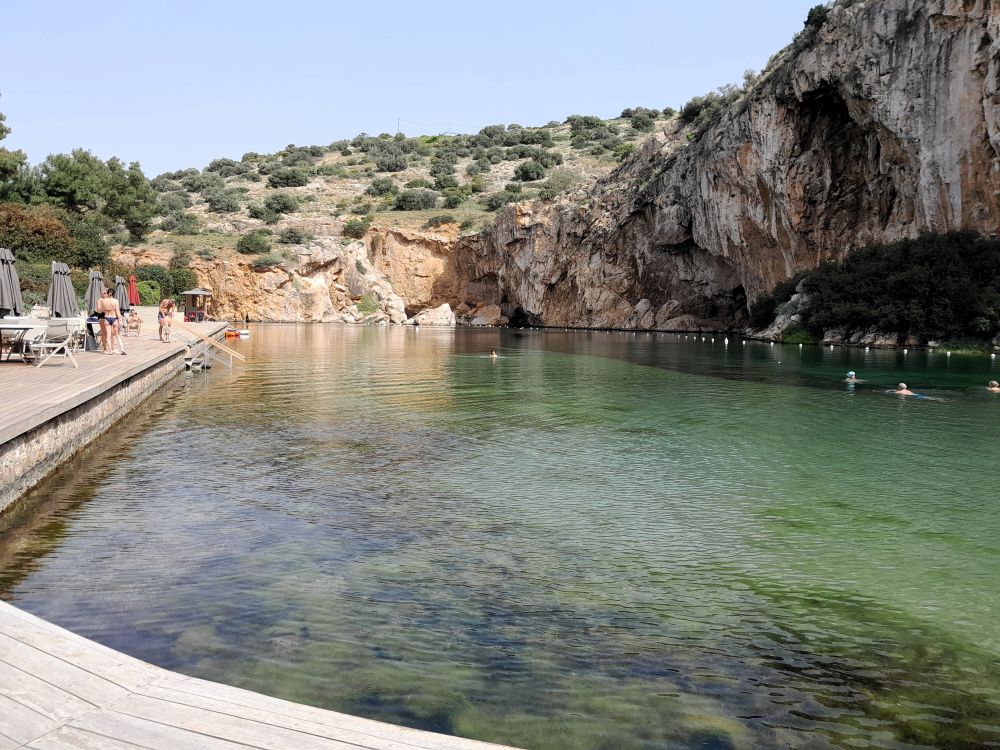
Athens has a hidden gem in the form of Lake Vouliagmeni. This serene natural mineral lake maintains a temperature much warmer than the sea. The lake is reported to have healing properties but it is the tranquil setting that does much of the healing.
Hop-on, hop-off bus tours generally stop at the entrance to Lake Vouliagmeni. The lake can also be reached by bus 122.
2 DAYS IN ATHENS: FAQ
How long to spend in Athens?
2 days in Athens is enough to see the main sites and absorb the atmosphere. The above itinerary allows for four days: I wouldn’t change anything about day one but the museums, the beaches and Lake Vouliagnmeni could be spread over three days.
Is Athens safe?
I and my partner felt safe at all times and didn’t see any antisocial behaviour. Take the usual precautions as you would for any large city.
Is Athens expensive?
I found Athens to be reasonably affordable. On booking.com there are lots of excellent hotels with rooms for less than €100 per night. It was possible to get an evening meal for €10. The taxi from the airport was the costliest spend.
Is Athens friendly?
My first visit to Greece was the island of Crete many years ago. Despite the sunshine and beaches, the attitude of the locals turned me right off re-visiting the country. Thankfully, my experience in Athens was the complete opposite and I would consider it to be one of the friendliest capital cities in Europe.
Do I need to know a lot about Greek history to understand the Athens sites?
Not particularly as each site has comprehensive information. It’s useful to know that Ancient Greece comprised a number of self-governing city states with Athens and Sparta as the most prolific. In subsequent years, Athens was ruled by the Romans, Byzantines, and the Ottomans until it gained independence in the 19th century.
Finally, while Athens lacks the splendour of other European capital cities, it makes up for in terms of friendliness and helpfulness. My experience has encouraged me to give the rest of Greece a go.
 Arrivals Hall