This post contains affiliate links. Please see my disclosure about affiliate links here.
Antwerp, the diamond capital of the world, is one of the most charming and vibrant destinations in Europe. I loved my time in Antwerp. This city is renowned for its history, culture, and architectural marvels that take you back in time.
From the stunning Cathedral of Our Lady to the bustling Grote Markt square, Antwerp is a treasure trove of attractions that will leave you spellbound.

Antwerp’s diamond industry has been thriving for centuries. The city is home to some of the world’s most renowned diamond dealers and cutters, making it a top destination for diamond enthusiasts and collectors.
But Antwerp is much more than just diamonds. Its quaint streets, hipster cafes, and gourmet restaurants offer a perfect blend of old-world charm and modern-day sophistication.
So is Antwerp worth visiting? If you’re looking for a unique and varied destination with friendly locals, Antwerp is definitely worth visiting. Here’s the evidence…
Where is Antwerp?
Antwerp is located in Flanders, the northern part of Belgium that borders The Netherlands. In fact, Antwerp is less than 30km from The Netherlands’ border.
Antwerp is approximately 50 minutes by train from Brussels and approximately 1 hour by train from Ghent. Antwerp is built on the Scheldt River. The city is home to Europe’s second largest port.
What language is spoken in Antwerp?
Flemish, a variant of Dutch, is the language spoken in Flanders. Pretty much everyone I met in the city spoke exceptionally good English.
The city is known as Antwerpen in Flemish. It’s known as Anvers in French, a piece of information you will need to know when travelling from French-speaking Brussels.
Why does Antwerp have lots of hand statues and emblems?
According to a legend, a giant levied taxes on ships passing through the Scheldt River. If a ship didn’t pay the tax, the giant chopped off the skipper’s hand.
Silvius Brabo, a Roman soldier, refused to pay the tax, chopping off the hand of the giant, and throwing it into the Scheldt. Hand-werpen is the act of throwing a hand. Over time, this verb gave the city its name of Antwerpen.

Brief history of Antwerp
To put the landmarks and sites into context, here’s a brief history of the city. It was settled by Germanic tribes in the 4th century and later became part of the Holy Roman Empire. When the canal that linked Bruges with the sea silted up, trade moved to Antwerp creating a golden age for the city.
In 1567, Spanish King Philip II sent troops to Antwerp to quell riots which developed as part of the Reformation. This resulted in the massacre of thousands of locals. The Dutch subsequently blocked access to the Scheldt, resulting in Antwerp’s demise as a trading centre.
Antwerp became part of the newly independent Belgium in 1830. The city was under German occupation in both World Wars. Antwerp was the second non-capital city to host the Summer Olympics, doing so in 1920.
Many people from Europe emigrated to the US via Antwerp port in the 20th century including Albert Einstein and Irving Berlin. These stories are documented in Antwerp’s Red Star Line museum.
Antwerp’s diamond trade and district
Antwerp’s diamond trade dates back to the 15th century when Antwerp became the main trading hub for diamonds in Europe. Today, Antwerp is home to some of the world’s most renowned diamond dealers, cutters, and polishers, making it a top destination for diamond enthusiasts, collectors and buyers.
The diamond district in Antwerp is located in the heart of the city, in the area immediately west of central station. The diamond district is home to over 1,500 diamond companies, 380 workshops and over 3,000 brokers making it the largest diamond district in the world.
Antwerp is known for its strict regulations and high-quality standards, so you can rest assured that you’re getting a genuine and high-quality diamond, should you wish to splash out.
Find out more about diamonds and their Antwerp story in the DIVA Museum.
What are Antwerp’s landmarks and sites?
Antwerp’s architecture is a mix of Gothic, Renaissance, and Baroque styles, making it one of the most stunning cities in Europe.
The city’s most famous landmark is the Cathedral of Our Lady (Onze-Lieve-Vrouwekathedraal or OLV for short), a stunning Gothic cathedral with one-and-half-towers. The cathedral is home to some of the most beautiful stained glass windows in Europe, and four masterpieces by Peter Paul Rubens.
Other churches worth visiting are Sint-Carolus Borromeuskerk and Sint Pauluskerk.

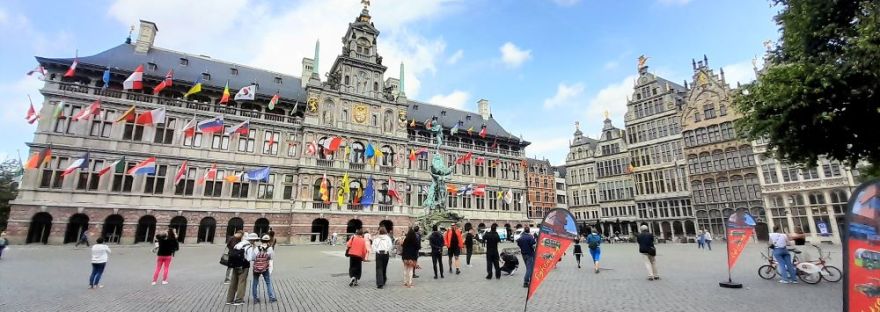
Another iconic landmark in Antwerp is the Grote Markt square, a bustling square lined with historic buildings and cafes. The square is home to the city’s Town Hall, a stunning Renaissance masterpiece, and the Brabo Fountain, a statue of mythical hero Silvius Brabo.
Het Steen is the oldest building in Antwerp and is the site on the Scheldt where the giant of folklore lived and collected taxes. Lange Wapper is a legendary statue located at the entrance to Het Steen.
Groenplaats is a much quieter square than Grote Markt and has a statue of Peter Paul Rubens.
Observant visitors will see a number of small statues of the Madonna on buildings. These statues date back to the Catholic Counter Reformation era.
Antwerp is also home to one of the world’s most beautiful train stations – Antwerp Central/Antwerpen Centraal. The station is a stunning example of Art Nouveau architecture.

Exploring Antwerp’s art scene
Antwerp has a rich and vibrant art scene, with many famous artists hailing from the city.
The Royal Museum of Fine Arts (KMSKA), located in the heart of the city, is home to a vast collection of Flemish and Dutch art, including works by Peter Paul Rubens, Anthony Van Dyck, and Rene Magritte. Maagdenhuis Museum also houses works by Rubens and Van Dyck.
Rubenshuis (Ruben’s House) was where Peter Paul Rubens lived and is now a museum. Statues of Anthony Van Dyck and David Teniers are located along Meir and Leysstraat respectively.

Museum de Reede, near Het Steen, has the largest collection of Edvard Munch works outside of Norway.
Handelsbeurs Antwerpen is an events venue off Meir (opposite Primark) that is worth checking out for exhibitions and concerts. Even if there is no event on, it’s a beautiful building to have a quick peek into.
Dining in Antwerp
Antwerp is a foodie’s paradise, with a wide range of restaurants and cuisines to choose from. The city is known for its seafood, with many restaurants serving fresh seafood straight from the North Sea. The city is also known for its Flemish cuisine, with many restaurants serving traditional Belgian dishes like mussels, fries, and waffles.
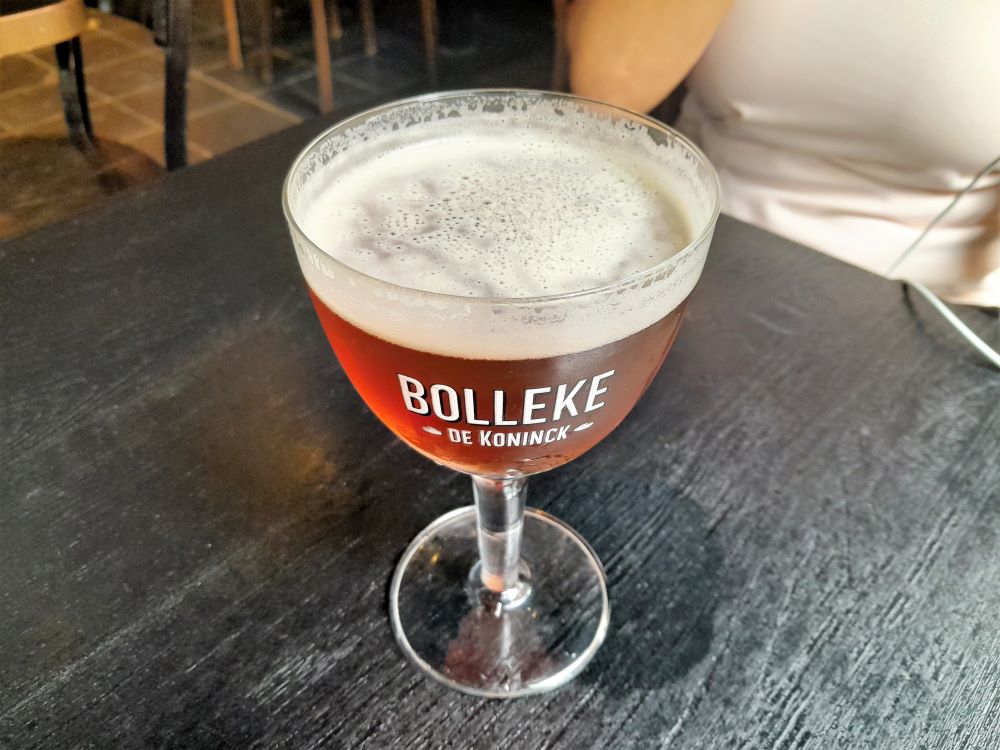
The side streets off Grote Markt and OLV have a great selection of hipster cafes and restaurants. Food is washed down with local beer Bolleke. Waffles and sweet treats are washed down with coffee.
Shopping in Antwerp
Antwerp is one of the best shopping cities that I’ve come across in my travels. It has a wide range of boutiques, high street chains, and vintage shops to choose from. Meir is Antwerp’s main shopping street.
The city is known for its fashion industry, with many designers hailing from Antwerp, most notably Dries van Noten who has a shop south of Groenplaats.
Best time to visit Antwerp
The best time to visit Antwerp is from May to September when the weather is reasonably mild. Bear in mind that the weather is very variable during this season. For example, when I visited in July, the weather jumped from 16°C to 26°C in the space of 24 hours!
Is Antwerp worth visiting in the winter? The Christmas season is also a popular time to visit, with many festive markets and events taking place throughout the city.
Accommodation options in Antwerp
Antwerp has a wide range of accommodation options to choose from, from budget-friendly hostels to luxury hotels. The area west of Central Station is the most popular area to stay, with many hotels and hostels located within walking distance of the city’s main attractions. Check out Stay22 for a comprehensive selection of options and deals.
While Antwerp is much cheaper than Brussels, if city centre prices are beyond your budget, bear in mind that Antwerp has a tram system that connects the outer parts of the city and the suburbs to the city centre. Therefore, staying outside of the city centre is an option.
Practical tips when visiting Antwerp
Antwerp is a very walkable city, so make sure to bring comfortable shoes.
The city is bike-friendly, with many bike rental options available. Antwerp’s shared bike scheme is called Velo.
Antwerp is a safe city, but like any major city, it’s important to take precautions and stay aware of your surroundings.
It’s always a good idea to bring a waterproof jacket or umbrella, as the weather can be unpredictable even in summer.
A walking tour is a great way of getting to know Antwerp. I did the free (tip-based) tour with Luc D of Legends Tours and found it to be excellent.
For practical tips on visiting the rest of Belgium, please see my Things to know about Belgium post.
How many days is enough for Antwerp?
I managed to see a lot of the city in two days. However, given the excellent train connections out of the city, Antwerp would be an excellent base to visit the rest of Flanders should you wish to spend a week in the region.
Is Antwerp worth visiting?
Yes, Antwerp is well worth visiting. It packs a lot into a small city. I found it to be a friendly place and learned a great deal about Flemish culture in the process.
It’s also an excellent alternative to Brussels should you be priced out of the Belgian capital. You can still do a day trip to Brussels given the excellent and reasonably priced train connections. Mechelen would also make for a good day trip from Antwerp.
 Arrivals Hall